
Declaraguate Migration Marks a New Phase in Guatemala’s Tax Digital Transformation
Declaraguate is evolving as Guatemala advances its tax digitalization strategy. Learn how the transition to integrated digital platforms is reshaping tax compliance, operational efficiency, and business readiness.

Declaraguate is entering a new stage as Guatemala advances the digital transformation of its tax administration. The migration of several tax forms to the Virtual Agency reflects a broader effort to modernize tax processes, strengthen compliance, and improve the efficiency of fiscal oversight.
Guatemala accelerates the digital transformation of its tax administration
Tax authorities worldwide have been modernizing their operations to improve efficiency, increase transparency, and strengthen tax collection through digital technologies. Guatemala is following the same path.
As part of this transformation, the Superintendence of Tax Administration (SAT) has begun migrating several forms from the Declaraguate platform to the Virtual Agency. The initiative seeks to replace manual procedures with more integrated digital processes, allowing multiple data sources to interact, reducing the likelihood of errors, and improving the traceability of tax information.
However, the transition extends beyond a technological upgrade. It represents a structural change in the way the SAT manages tax compliance and oversees corporate tax obligations.
Digitalization increases both efficiency and compliance requirements

As tax systems become more connected, information is expected to move faster across platforms, while tax authorities gain access to more advanced monitoring capabilities.
Under this model, inconsistencies, reporting errors, or weaknesses in internal controls may be identified more quickly than before.
The result is that digitalization not only simplifies administrative procedures but also raises the level of compliance expected from businesses.
Businesses face operational challenges as the transition advances
For many companies, particularly small and medium-sized businesses, the migration to new digital platforms presents significant operational challenges.
Adapting to updated systems, understanding modifications to tax forms, and managing digital access require time, technical knowledge, and in some cases additional investment.
Despite these challenges, the transition also creates opportunities for organizations willing to strengthen their internal tax processes.
Stronger tax management can become a competitive advantage
Companies that successfully organize their tax information, automate compliance processes, and reinforce internal controls can reduce operational risks while improving overall efficiency.
In this context, digital tax transformation becomes more than a regulatory requirement, it can also provide a competitive advantage for businesses that adapt early.
A global trend that demands strategic adaptation
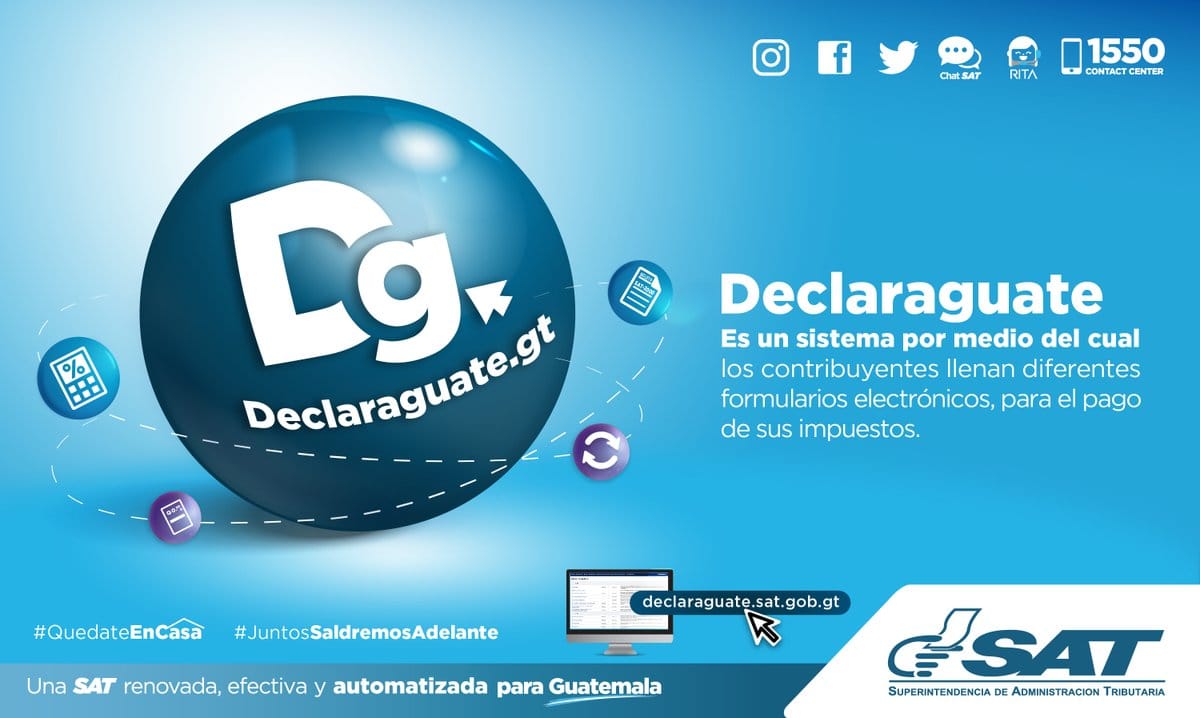
The evolution of Declaraguate reflects a broader international movement toward tax administrations that rely increasingly on digital infrastructure, interconnected systems, and data-driven oversight.
This makes one question particularly relevant for businesses:
"Tax administrations are undergoing digital transformation: are we prepared?"
The answer depends not only on the availability of technology but also on each company's ability to anticipate change, adapt its processes, and manage the transition strategically.
The integration of Declaraguate into more advanced digital platforms is therefore part of a wider transformation of Guatemala's tax system. For businesses, the primary challenge is not the change itself, but the speed at which they must respond.
Organizations that prepare in time will not only strengthen tax compliance but will also be better positioned to operate in an increasingly transparent, digitalized, and demanding business environment.


