
OAS Selects Guatemala to Lead Regional Port Security and Protection Efforts
Guatemala will chair the OAS Technical Advisory Committee on Port Protection and Security for 2026–2029 after earning the Americas Award for Excellence in Port Security.

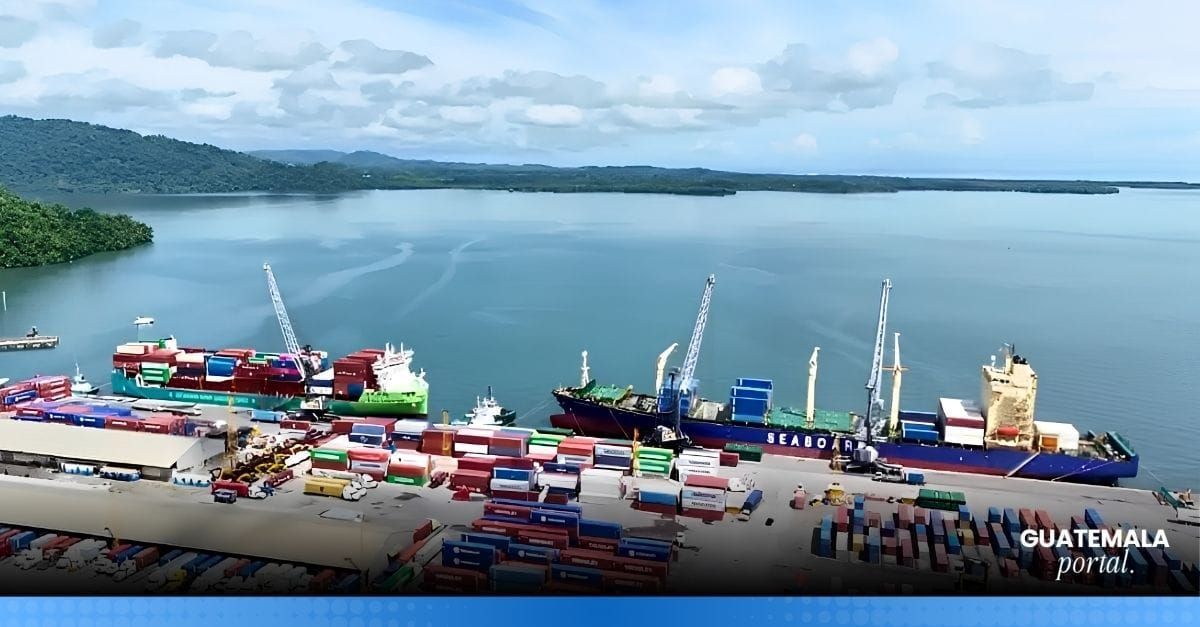
Comité de Seguridad Portuaria de América became the center of attention after Guatemala was elected to lead the Organization of American States' (OAS) Technical Advisory Committee on Port Protection and Security for the 2026–2029 term. The appointment, together with the country's recognition for excellence in port security, reflects Guatemala's transformation into a regional benchmark for secure maritime operations.
Guatemala elected to chair the OAS Port Security Committee
Guatemala was elected to preside over the Technical Advisory Committee on Port Protection and Security of the Inter-American Committee on Ports (CIP) of the Organization of American States (OAS) for the 2026–2029 period.
In addition to the leadership role, the country received the Americas Award for Excellence in Port Security, recognizing the progress made in strengthening port protection standards.
Both recognitions were announced during the 14th Ordinary Meeting of the Inter-American Committee on Ports, held in Bridgetown, Barbados, from June 8 to 10, 2026, under the theme "The Scope of Artificial Intelligence: Reconfiguring Strategies for Sustainable and Secure Ports."
According to Leonel Molina, Director General of Guatemala's Designated Authority, the election reflects the country's progress in recent years.
"This represents recognition for the country after demonstrating positive progress."
🇬🇹Guatemala asume la presidencia del Comité de Protección Portuaria de la @OEA_oficial.
— CPN -Autoridad Designada- (@cpngobgt) June 15, 2026
La elección realizada por los Estados Miembros durante la XIV Reunión Ordinaria de la Comisión Interamericana de Puertos (CIP), reconoce el liderazgo, la experiencia y el compromiso del país… pic.twitter.com/4H2Cz5XQBU
Regulatory reforms reshaped Guatemala's port security system
Molina attributed much of Guatemala's transformation to Decree 26-2024, legislation that significantly expanded the authority of the country's Designated Authority.
Previously, the National Port Commission primarily served as an advisory body. Under the new legal framework, the Designated Authority now has the power to conduct audits, enforce compliance, and impose sanctions.
Guatemala also adopted the International Ship and Port Facility Security (ISPS) Code established by the International Maritime Organization (IMO), implemented a formal sanctions framework, and appointed security officers at every port terminal.
According to Molina, these measures have strengthened confidence among shipping companies and international trading partners.
"No shipping company wants to operate through ports that cannot guarantee measures that eliminate risks to vessels or cargo."
From compliance concerns to regional leadership
Between 2018 and 2023, Guatemala faced challenges due to low compliance levels in port security standards, affecting the country's reputation among international shipping companies and commercial partners.
Deficiencies in access control, perimeter security, and cargo inspections can increase transportation costs or even limit maritime operations.
Today, Molina believes the country's position has changed dramatically.
"Moving from being viewed as a country with low-level ports to winning an award and earning the support of all 34 member states is our greatest achievement."
The official highlighted several tangible improvements, including mandatory audits, real-time reporting systems, and a sanctions unit within the Ministry of Communications responsible for enforcing compliance.
César Falcón, President of the Guatemalan Shipowners Association (Asonav), described the appointment as:
"A historic achievement that reflects the region's confidence in our country."
Interagency coordination became Guatemala's competitive advantage
According to Molina, the model recognized by the OAS is not based primarily on expensive technology but on effective institutional coordination.
Under the current framework, the Armed Forces oversee maritime security, the Tax Administration (SAT) supervises cargo, the National Civil Police monitors land operations, immigration authorities control passenger movement, and the Ministry of Agriculture (MAGA) manages quarantine inspections.
All agencies report to a single Designated Authority.
"Following Decree 26-2024, Guatemala adopted an efficient model based on interagency coordination, and that led the OAS to grant this recognition."
This coordinated approach is now one of Guatemala's defining strengths.
At Puerto Quetzal, for example, trucks entering the port pass through automated inspection tunnels equipped with cameras capable of reading license plates, container identification, security seals, and driver identities.
The information is transmitted directly to both SAT and port authorities. Any inconsistency immediately triggers a secondary inspection process, combining stronger security with greater operational efficiency.
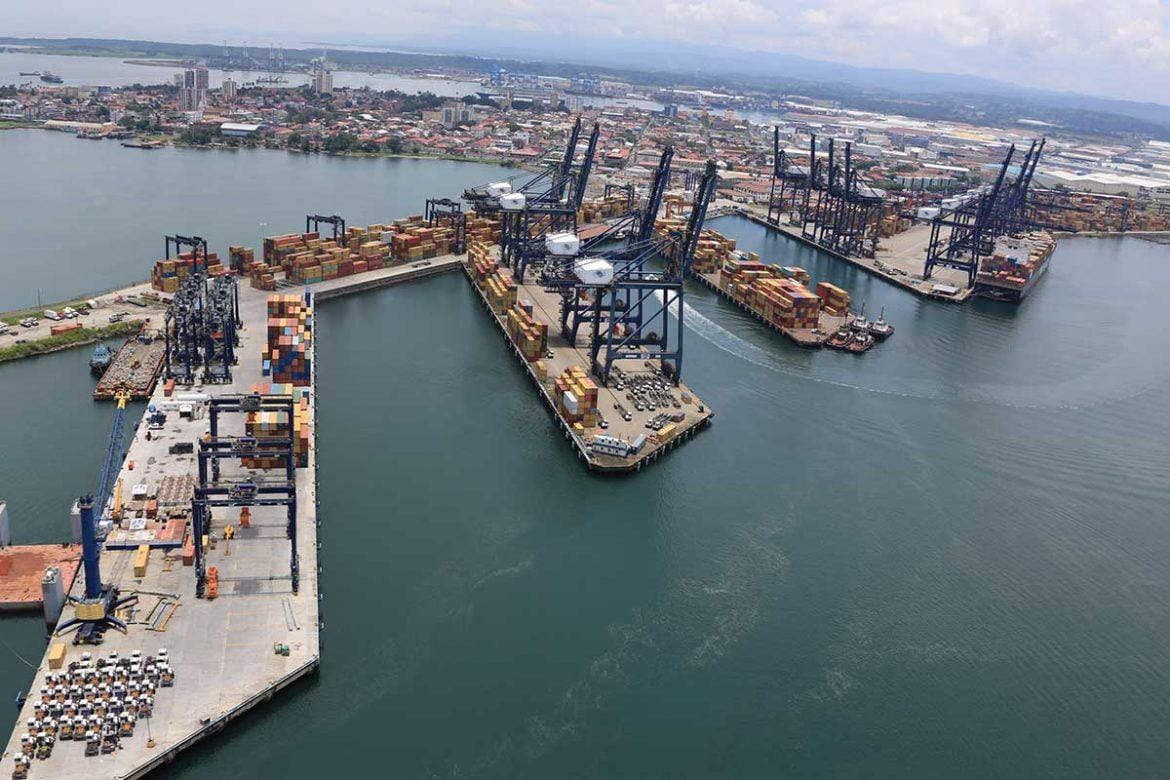
Security and modernization now go hand in hand
Molina emphasized that port modernization and port protection are distinct concepts, although increasingly interconnected.
Modernization includes areas such as decarbonization, operational efficiency, cargo handling, and stronger relationships between ports and surrounding communities.
However, he stressed that modernization cannot succeed without strong security measures.
"Protection measures ensure access control, perimeter security, entry management, and technologies such as surveillance cameras. Today, that technology is also modernization."
Technologies initially introduced for security purposes—including biometric registration, facial recognition, and automated inspection tunnels—are now also accelerating cargo processing by reducing manual procedures and improving data verification.
The result is fewer delays and greater cargo throughput.
Leadership brings new opportunities but challenges remain
Despite recent progress, Guatemala's National Port Commission acknowledges that the country continues to face logistical challenges, particularly regarding port capacity and operational bottlenecks affecting unloading times at Puerto Quetzal.
As chair of the committee, Guatemala intends to promote stronger implementation of the ISPS Code throughout the Americas while helping member countries secure funding, strengthen cooperation among port authorities, and develop manuals, technical guidelines, and conferences focused on innovative port management.
Falcón said Asonav is confident that Guatemala's leadership will strengthen international best practices while ensuring that supply chains linked to Guatemalan foreign trade continue to be recognized as secure from their point of origin.
Regional leadership could strengthen Guatemala's competitiveness

According to Guatemalan authorities, leading the committee provides benefits beyond international recognition.
Improved confidence in the country's ports may contribute to lower shipping surcharges, reduced insurance costs, faster cargo movement, and greater competitiveness for exporters, including coffee and textile producers.
Through its new position within the OAS, Guatemala also expects to facilitate access to international funding aimed at supporting port modernization projects focused on technology, sustainability, and operational efficiency.
"Closing the chapter on the country's negative perception now makes us a benchmark for positive transformation and the implementation of a new model," Molina concluded.
Falcón also reaffirmed Asonav's commitment to supporting these efforts.
"We congratulate the National Port Commission for this important recognition and reaffirm our full commitment to continue collaborating toward efficient, competitive, and above all, secure maritime trade."
Looking ahead, Guatemala plans to continue strengthening audits, enforcing compliance, and using its regional leadership to attract financing that supports modernization initiatives, including decarbonization, efficiency improvements, and stronger port-city integration.


