Guatemala’s Banking System Shows Strong Liquidity as Savings Rates Decline
Liquidity Guatemala remains at strong levels as banks maintain financial stability, keeping credit accessible while lowering returns on savings and fixed-term deposits.


Liquidity in Guatemala continues to shape the country’s financial environment as the banking system operates under historically stable conditions, supported by controlled inflation and a benchmark interest rate from the Banco de Guatemala fixed at 3.50%.
This scenario has created contrasting effects for consumers. While borrowers continue benefiting from stable and accessible credit conditions, savers are seeing lower returns on traditional savings accounts and fixed-term deposits.
Excess liquidity reduces pressure on banks to attract deposits
According to data from the 2025 Financial Stability Report published by the Banco de Guatemala, the banking system currently maintains strong liquidity coverage levels.
Medium-term liquidity reached 44.9%, while immediate liquidity stood at 19.0%, reflecting the sector’s capacity to respond to withdrawals and financial obligations even under stress scenarios.
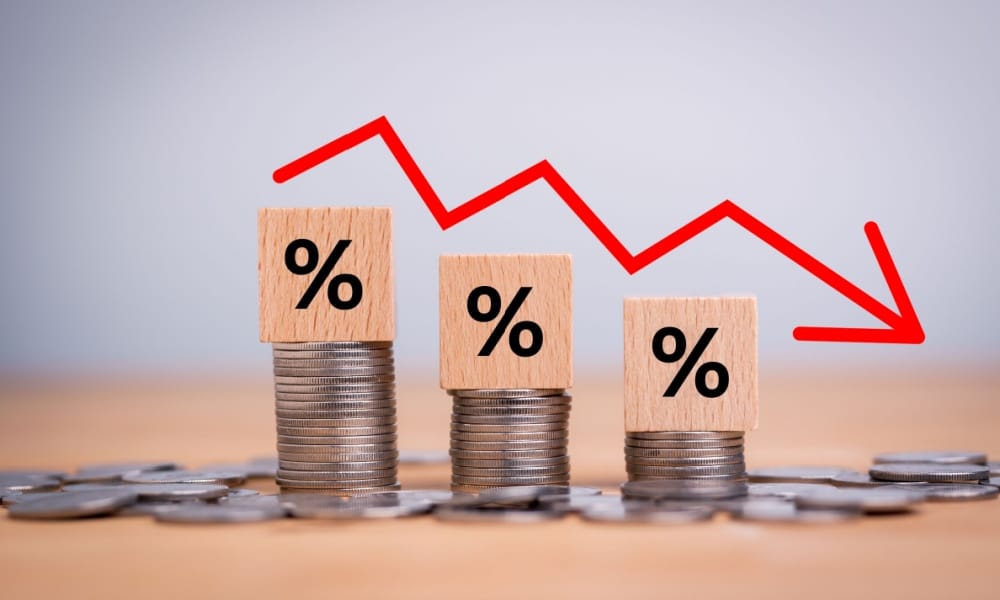
For analysts, this abundance of available resources explains why passive interest rates — the rates banks pay savers — have started to decline.
In practical terms, banks no longer need to aggressively compete for deposits because they already have sufficient funding available. As a result, savings products that previously generated around Q6,000 in annual interest are now producing closer to Q4,250.
Stable loans provide relief for borrowers
While savings yields continue to weaken, borrowers have experienced a more favorable environment.
Economists consulted by local media explain that the combination of high liquidity and a stable benchmark rate has prevented significant increases in borrowing costs. Monthly loan payments have remained predictable, especially for long-term financing and investment projects.
Mortgage lending rates currently fluctuate between 8.5% and 14%, creating what analysts describe as a market environment that rewards the movement of capital rather than passive savings accumulation.
According to economist Luis San José, abundant liquidity keeps both passive and active rates under control.
“When there is an abundance of funds, banks do not compete to attract money and maintain savings rates at minimum levels,” he explained.
San José added that the same liquidity also pressures lending rates downward or keeps them stable, facilitating access to financing.

Banking sector maintains strong financial position
Enrique Rodríguez, president of the Asociación Bancaria de Guatemala, stated that Guatemala’s banking sector remains in a solid liquidity position.
“The Guatemalan banking system has sufficient resources to face cash outflows, even in scenarios of financial stress,” Rodríguez said.
He also noted that liquidity indicators remain above recommendations established by the Basel Committee, reinforcing confidence in the financial system.
For consumers, this stability translates into security for deposits and lower volatility in credit markets.
Guatemala’s benchmark rate continues to guide the market
Economist Hugo Maúl explained that the benchmark rate established by the central bank acts primarily as a market signal.
“If the benchmark rate rises, the cost of credit increases. If it remains stable, banks feel no pressure to attract additional liquidity,” Maúl said.
Currently, the banking system’s funding structure depends heavily on deposits, which represent 89% of total funding sources. Although credit activity continues growing at an annual rate of 9.9%, expansion has slowed compared to previous periods.
This imbalance between incoming deposits and loan placement reduces incentives for banks to offer higher returns to savers.
Rodríguez also highlighted that low inflation has allowed the central bank to maintain an accommodative monetary policy.
Under normal circumstances, central banks raise rates to control inflation by encouraging savings and reducing consumption. However, Guatemala’s inflation levels remain moderate, allowing authorities to keep the benchmark rate unchanged at 3.50%.
Savers face lower real returns
Despite overall financial stability, savers are increasingly challenged by lower real returns.
Analysts warn that when inflation approaches 2.50% and fixed-term deposits pay around 3.75%, the real gain before taxes narrows significantly. In ordinary savings accounts paying close to 0.5%, purchasing power may gradually deteriorate over time.
San José warned that if inflationary pressures linked to oil prices or basic goods return while rates remain unchanged, incentives to save could weaken further.
“People save out of habit or for security, but with stable rates and rising inflation, the incentive disappears,” he said.
Investors explore alternatives beyond traditional savings
Given the current environment, experts suggest that individuals reassess how they manage their capital.
Maúl noted that investment decisions ultimately depend on each person’s financial profile and risk tolerance. Some households may prefer real estate as a long-term value-preservation strategy, while others may seek longer-term deposits to lock in stable returns.
At the same time, he warned against investment schemes promising excessively high returns, emphasizing that many may involve hidden risks or fraudulent practices.
San José identified Treasury bonds as one of the most attractive alternatives currently available, with yields ranging between 5.6% and 6%, above most commercial banking products.
He also mentioned investment funds as a way to diversify portfolios and pursue stronger long-term performance. For larger investors, options such as real estate assets or partial dollarization may provide additional protection.

Financial stability changes the role of savings
Guatemala’s current financial landscape reflects a banking system operating from a position of strength rather than weakness.
However, the same liquidity that reinforces stability is also reducing incentives for traditional savings, forcing consumers to become more strategic about where they place their money.
For many Guatemalans, the message emerging from today’s market conditions is increasingly clear: stable credit remains accessible, but preserving purchasing power now requires more active financial management.