
Ley Antilavado: A New Approach to Risk Management and Business Protection in Guatemala
Guatemala’s new Ley Antilavado introduces a risk-based approach to compliance, expands prevention responsibilities to new sectors, and seeks to strengthen transparency, business protection, and economic integrity.


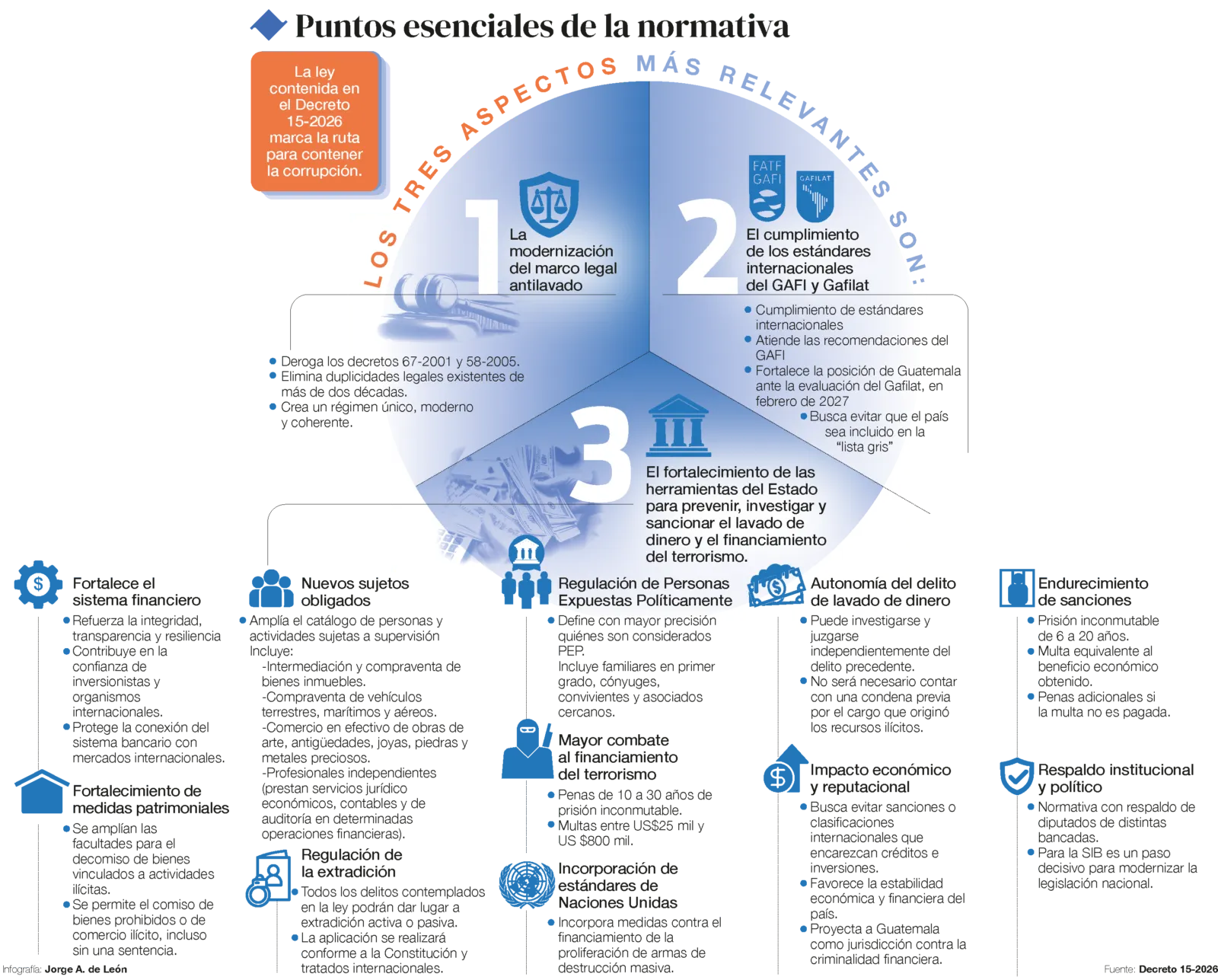
Ley Antilavado has become a central topic of discussion following the approval of Guatemala’s new Comprehensive Law Against Money Laundering, Other Assets, and Terrorism Financing. While the legislation has prompted questions and concerns among various sectors, it also presents an opportunity to strengthen prevention practices and promote a more strategic approach to risk management.
A Shift Toward Risk-Based Compliance
One of the most significant aspects of the new law is its recognition that not all organizations face the same level of risk.
The legislation incorporates a risk-based approach, allowing businesses and organizations to tailor their prevention efforts according to the nature of their operations, the types of clients they serve, and the environments in which they operate.
This represents an important shift in compliance practices. Rather than applying a uniform framework to all entities, prevention measures can now be aligned more closely with each organization's specific risk profile.
As a result, compliance evolves from a standardized obligation into a strategic process focused on identifying and managing risk.
More Sectors Will Be Required to Participate
The law also broadens the range of organizations and economic activities expected to play an active role in prevention efforts.
New sectors that previously had no specific obligations in this area will now be required to implement measures designed to prevent money laundering and terrorism financing.
While this expansion may raise concerns among organizations facing new compliance requirements, it also reflects a broader effort to strengthen transparency and accountability across the economy.
Prevention as a Tool for Economic Protection
The incorporation of additional obligated entities will require adaptation processes, employee training, and the reinforcement of internal controls.
However, the purpose of prevention measures is not to restrict economic activity. Instead, the objective is to protect businesses and strengthen the integrity of the economic system.
Countries that reinforce transparency and prevention mechanisms often create stronger conditions for investment, encourage trust among stakeholders, and contribute to more resilient economic environments.
Successful Implementation Will Be Critical
The effectiveness of the new framework will ultimately depend on how it is implemented.
For that reason, it will be important for the institutions responsible for enforcement and oversight to provide guidance, training, and reasonable transition periods. These efforts can help businesses, professionals, and citizens better understand their responsibilities and gradually adapt to the new requirements.
A collaborative approach during the implementation phase will be essential to ensure that compliance objectives are achieved without creating unnecessary barriers.
Businesses Should Begin Preparing Now
From a business perspective, preparation should begin immediately.
Organizations can take proactive steps by reviewing the new legal framework, conducting internal assessments, identifying compliance gaps, and strengthening existing prevention mechanisms.
These actions will be particularly important in the coming months as companies adapt their operations to meet the new standards.
Building More Resilient Organizations
The broader message behind the new legislation is that prevention should not be viewed solely as a regulatory burden.
Instead, it can serve as a tool to protect business continuity, strengthen governance, and improve long-term resilience.
Organizations that understand their risks, manage them effectively, and implement stronger controls are often better positioned not only to comply with regulations but also to build more sustainable and secure operations for the future.


