
Companies in Central America That Already Measure Their Carbon Footprint
Learn which Central American companies are measuring their carbon footprint and how they are leading environmental management.


Today, companies in Central America that measure their carbon footprint are redefining corporate management standards by turning data into operational efficiency strategies. This shift allows decision-makers to identify risks and opportunities within their value chains, ensuring resilience in an increasingly demanding environment.
Leading organizations in the region show that quantification under international standards is the first step toward effective decarbonization. These companies go beyond reporting figures; they actively manage their impact to ensure economic growth aligned with the preservation of the regional environment.
In this context, it is important to distinguish between levels of corporate climate management. Measuring a carbon footprint is the first step; however, concepts such as carbon neutrality and carbon positivity reflect more advanced stages of action. While a carbon-neutral company offsets all of its emissions, a carbon-positive organization goes further by removing or compensating more CO2 than it generates through its operations.
Central American companies working on their carbon footprint
FIFCO

For FIFCO, sustainability is a core pillar that goes beyond simple offsetting. Its strategy focuses on giving back more to the ecosystem than its operations take, achieving “carbon positive” goals at its facilities in Costa Rica. This achievement is based on a deep reengineering of its internal processes, where efficiency is treated as a metric of environmental regeneration that strengthens its reputation among international stakeholders.
One of its most notable achievements is the implementation of a “Shared Loads” system within its logistics network. Thanks to this route optimization strategy, the company has avoided traveling more than 54,680 miles (88,000 kilometers), directly resulting in a significant reduction in greenhouse gas emissions.
Agencias J.I. Cohen

Agencias J.I. Cohen, founded by Jack Irving Cohen and led by Alberto Cohen Mory, stands out as a benchmark in environmental management within pharmaceutical logistics through the rigorous measurement of 1,707.97 t CO2e. Its approach to corporate sustainability focuses on breaking down the impact of its facilities in Mixco and Quetzaltenango to optimize the use of critical resources. Through continuous monitoring, the company ensures that the distribution of healthcare products meets high ethical standards, making each delivery environmentally responsible.
At the corporate level, the organization operates under a carbon-positive environmental model, as it offsets and exceeds its total emissions through carbon capture processes. This capability allows emissions generated by its pharmaceutical operations to be mitigated within a comprehensive strategy that combines logistics efficiency, renewable energy use, and environmental offsetting, resulting in a net positive impact.
Cementos Progreso
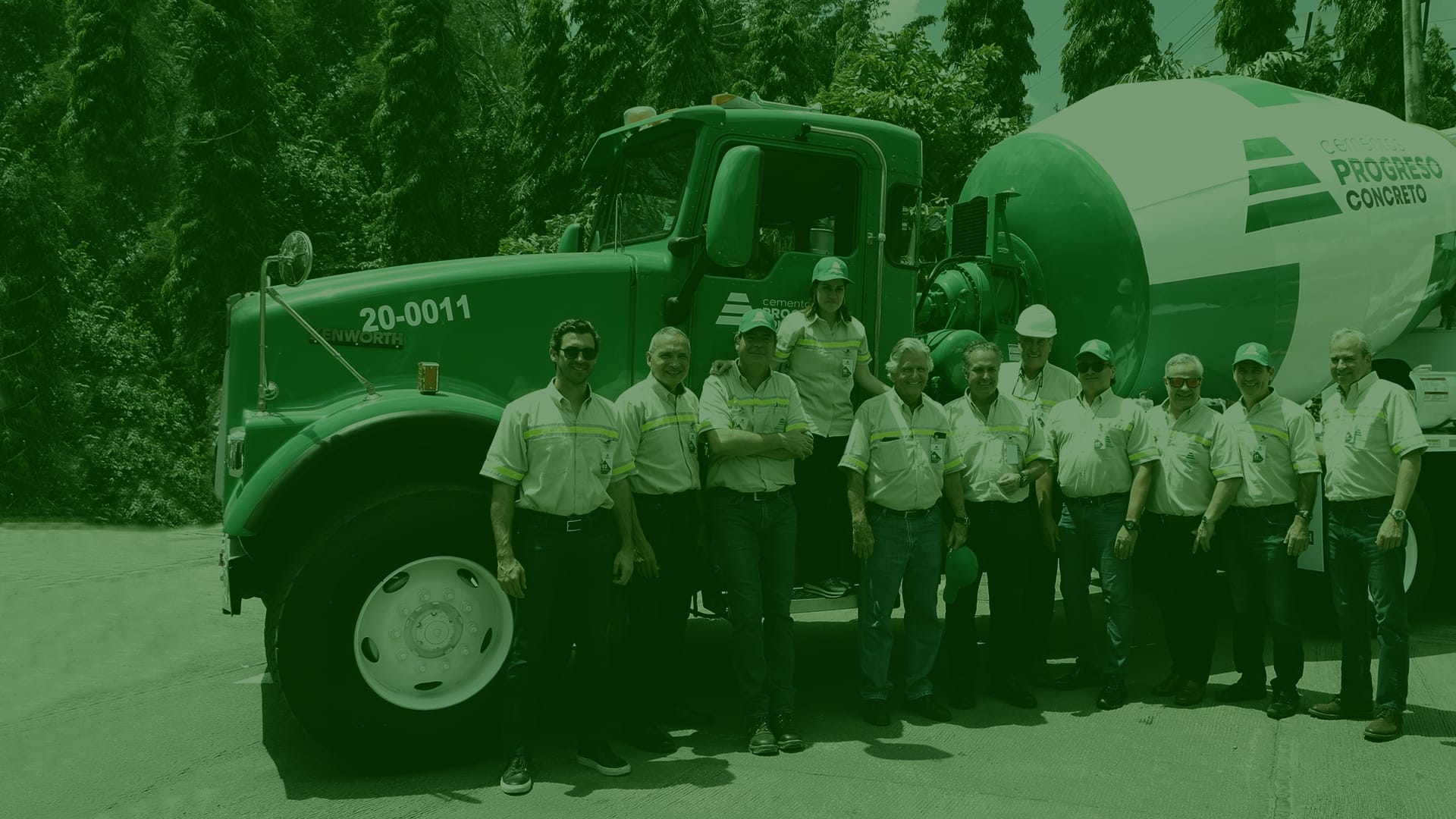
Cementos Progreso has set an ambitious benchmark for the construction sector in Guatemala by outlining a roadmap toward carbon-positive status. The company integrates rigorous measurement of its direct and indirect emissions, using international standards to validate each operational milestone. Its corporate management prioritizes technological innovation to transform a traditionally energy-intensive industry into a model of climate responsibility that attracts sustainable investment.
Currently, 62.1% of the organization’s electricity consumption comes from renewable sources, a milestone that positively impacts the reduction of its reliance on imported energy. By replacing fossil fuels with clean alternatives, the company not only improves its public environmental profile but also strengthens its operational resilience.
As a result, the use of clean energy is consolidated as a strategic asset that enables the organization to lead the transition toward greener infrastructure in the region.


