
Spectrum Drives Sustainable City Transformation Through Responsible Development Initiatives
Spectrum reinforces its Responsible Development strategy with sustainable design, LEED Silver certification for Oakland Place, circular economy initiatives, and urban solutions that improve community well-being and city connectivity.


Spectrum continues positioning itself as a leader in responsible city-building, reinforcing its long-term vision with initiatives that prioritize efficiency, sustainability, and community well-being.
The company’s recent LEED Silver certification for Oakland Place highlights its progress and reaffirms its commitment to integrating environmental and social responsibility into every project.
A Strategy Grounded in Responsible Development
The company presented the initiatives that shape its Responsible Development strategy, a framework that guides each project toward a more balanced relationship with the urban environment.
For Spectrum, sustainability is not a separate action but a working methodology that results in better-integrated spaces, efficient resource use, and developments designed with purpose. Belem Salomón, Spectrum’s Responsible Development Manager, emphasized the impact of this approach.
“Our priority is to leave a positive environmental footprint, improve neighborhoods, and strengthen the spaces where people move every day,” she said.
Efficiency-by-Design: Integrating Sustainable Principles From the Start
One of the guiding pillars of Spectrum’s sustainability vision is the incorporation of high-efficiency criteria from the earliest design phase. Carlos Ramírez, Development Manager at Spectrum, explained how this technical focus has shaped the company’s environmental performance.
“Although we have increased our built area, our emissions have decreased because we design better. We integrate renewable energy, smart lighting systems, and bioclimatic principles that reduce energy consumption without compromising comfort,” he noted.
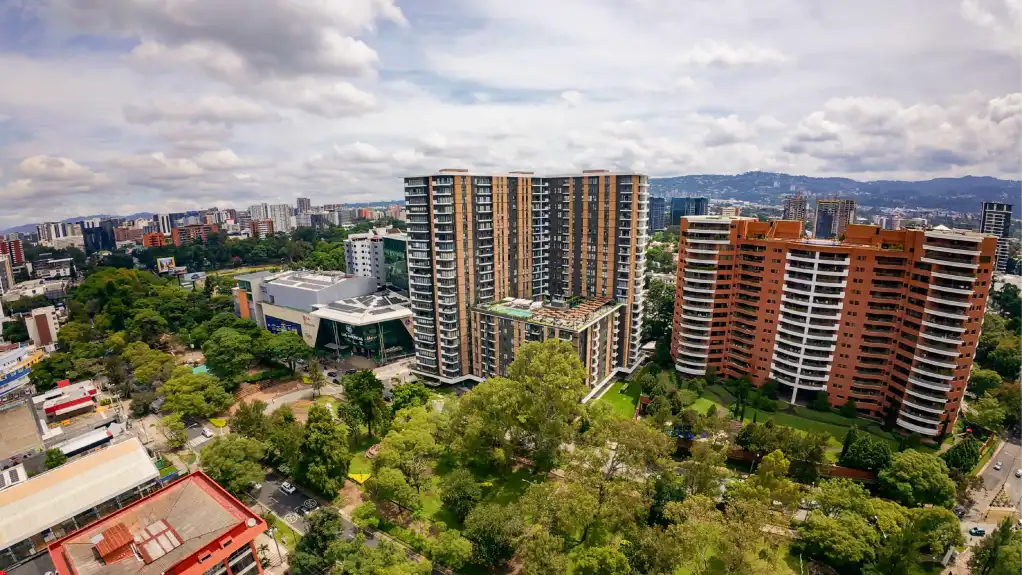
This approach includes the installation of solar panels in Naranjo, Portales, Miraflores, and Oakland Place, the use of automated LED lighting, and the design of naturally ventilated common areas. The recently awarded LEED Silver certification for Oakland Place further validates this work.
As Ramírez stated, “LEED confirms that we are on the right path. It’s not just about meeting standards but proving that responsible, efficient, and environmentally respectful construction is possible.”
Expanding Green Spaces and Strengthening Urban Ecosystems
Spectrum has developed more than 11,000 m² of urban parks in Miraflores and Oakland Place, spaces that encourage healthy habits and connect communities with nature.
Resilient Urban Solutions and Circular Economy Efforts
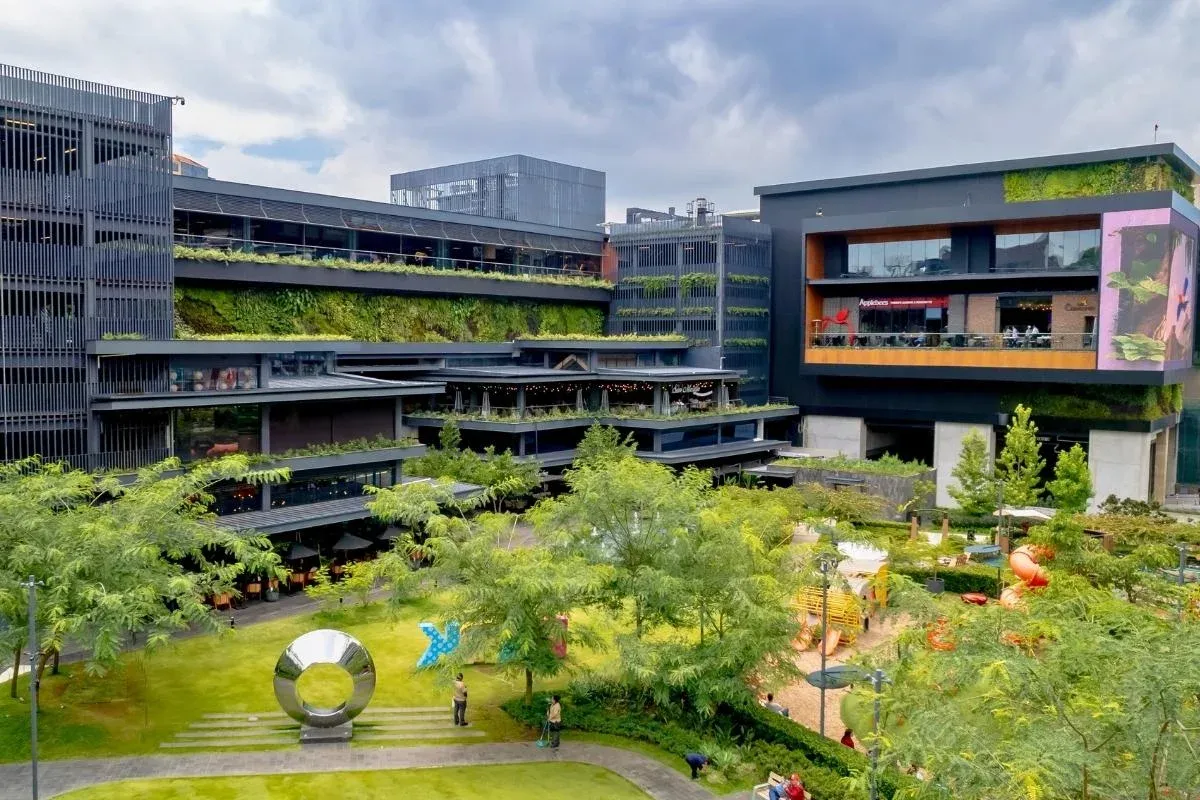
The company also advances water efficiency initiatives, achieving consumption reductions of up to 37%. Its industrial composting systems in Oakland Place and Miraflores transform organic waste into compost for green areas.
“In 2025, we managed to reuse or divert 69% of our waste from landfills. It’s a significant milestone that motivates us to continue innovating,” said Salomón.
Ramírez further highlighted the importance of circular practices:
“Circular economy allows us to close loops. What used to be waste now returns to the soil as a valuable input. These solutions prove that sustainability can also be efficient, measurable, and replicable.”
Art, Community, and Social Sustainability
Spectrum also champions initiatives that strengthen community bonds. One example is the ‘Observador de Estrellas’ sculpture near Parque 14, an artwork that enhances the urban landscape and encourages a sense of ownership of public space.
In housing projects, the programs Conviviendo and Spectrum Sostenible support residents through workshops, guides, and activities focused on coexistence, civic culture, and the responsible use of resources, including energy and water conservation and improved waste management.
Toward a More Connected and Walkable City

Spectrum’s vision also takes shape through mobility projects. These include the Oakland overpass, which incorporates vegetation and safer pedestrian infrastructure, and the widening of sidewalks on 13th Street to prioritize foot traffic.
The company contributed to the bike lane that links Reforma Avenue with the Obelisco and promotes cycling as a sustainable mode of transport. At Oakland Place, 26% of visitors enter through pedestrian access points, demonstrating the impact of these efforts.
For Ramírez, these mobility initiatives reflect meaningful change:
“A more walkable, safe, and connected city directly improves quality of life. Every urban intervention we advance aims to generate that impact.”