Science Clubs Promote Early STEM Education with Support from the German Embassy
Science Clubs in Guatemala received scientific kits through a cooperation initiative supported by the German Embassy, promoting hands-on learning, critical thinking, and early interest in science and technology.


Science Clubs in Guatemala are strengthening hands-on science education after five school-based clubs received scientific kits and supplies through an international cooperation effort that brings together public institutions, academia, civil society, and diplomatic partners.
International cooperation strengthens science education
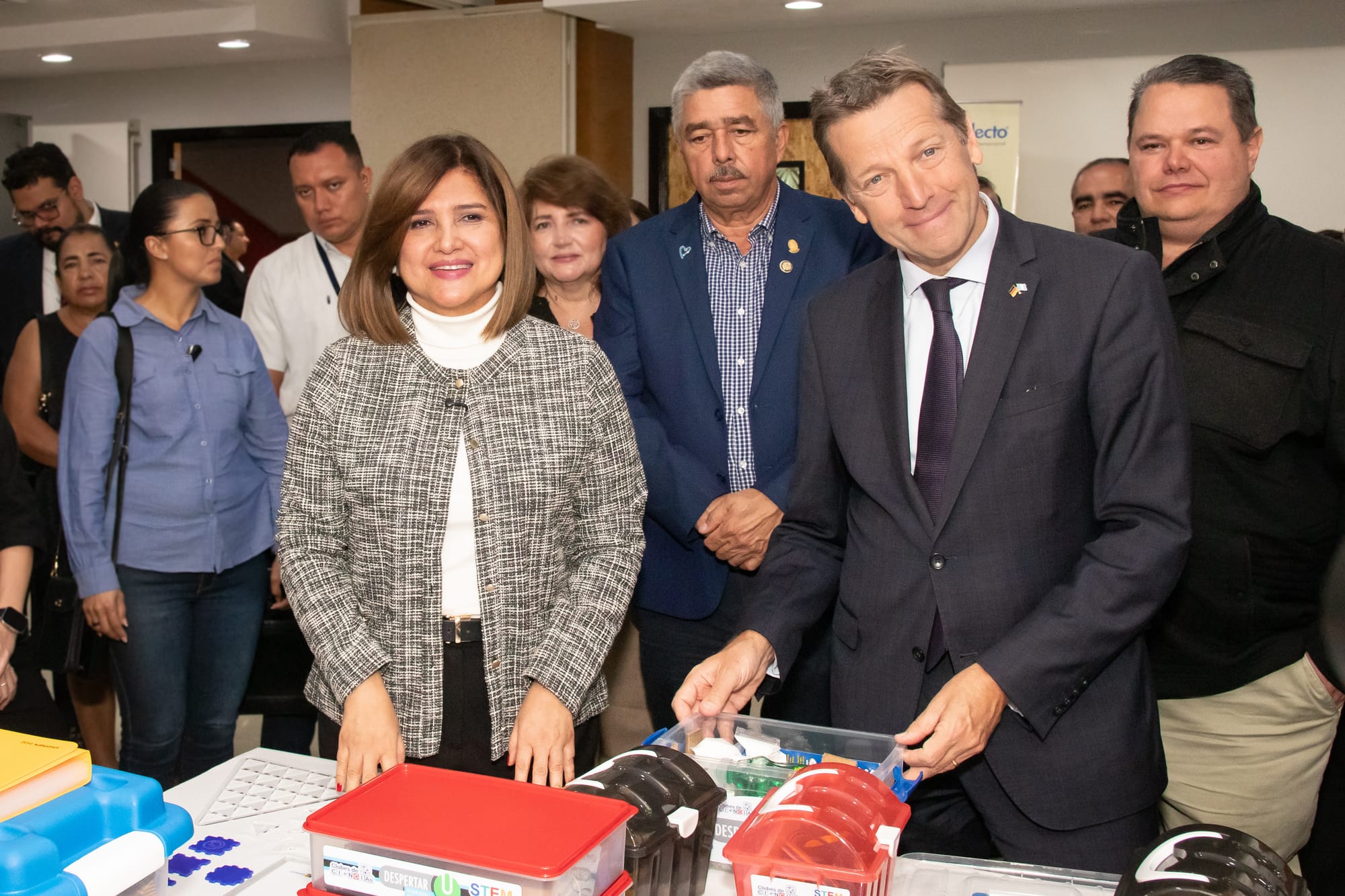
Five Science Clubs formed by educational centers from Fe y Alegría and the Municipality of Esquipulas received a donation of scientific kits and materials with the support of the German Embassy.
The delivery was made possible through the management of Guatemala’s Vice President, Karin Herrera, as part of a strategic alliance involving the National Secretariat of Science and Technology (Senacyt), Grupo Intelecto, and Universidad Galileo.
The official handover ceremony took place at Universidad Galileo, with the participation of:
- Vice President, Karin Herrera
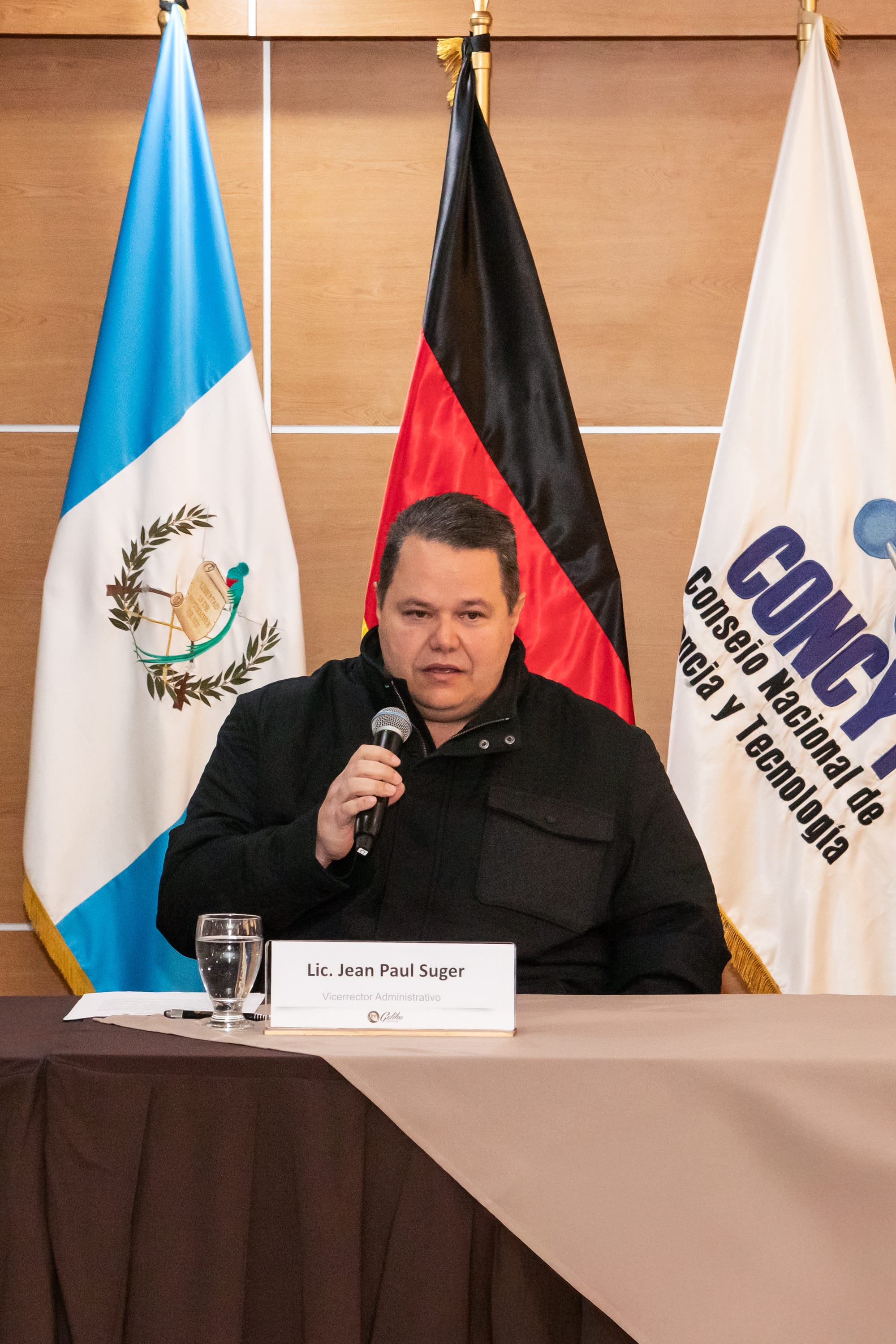
- Jean Paul Suger, Vice Chancellor of Universidad Galileo
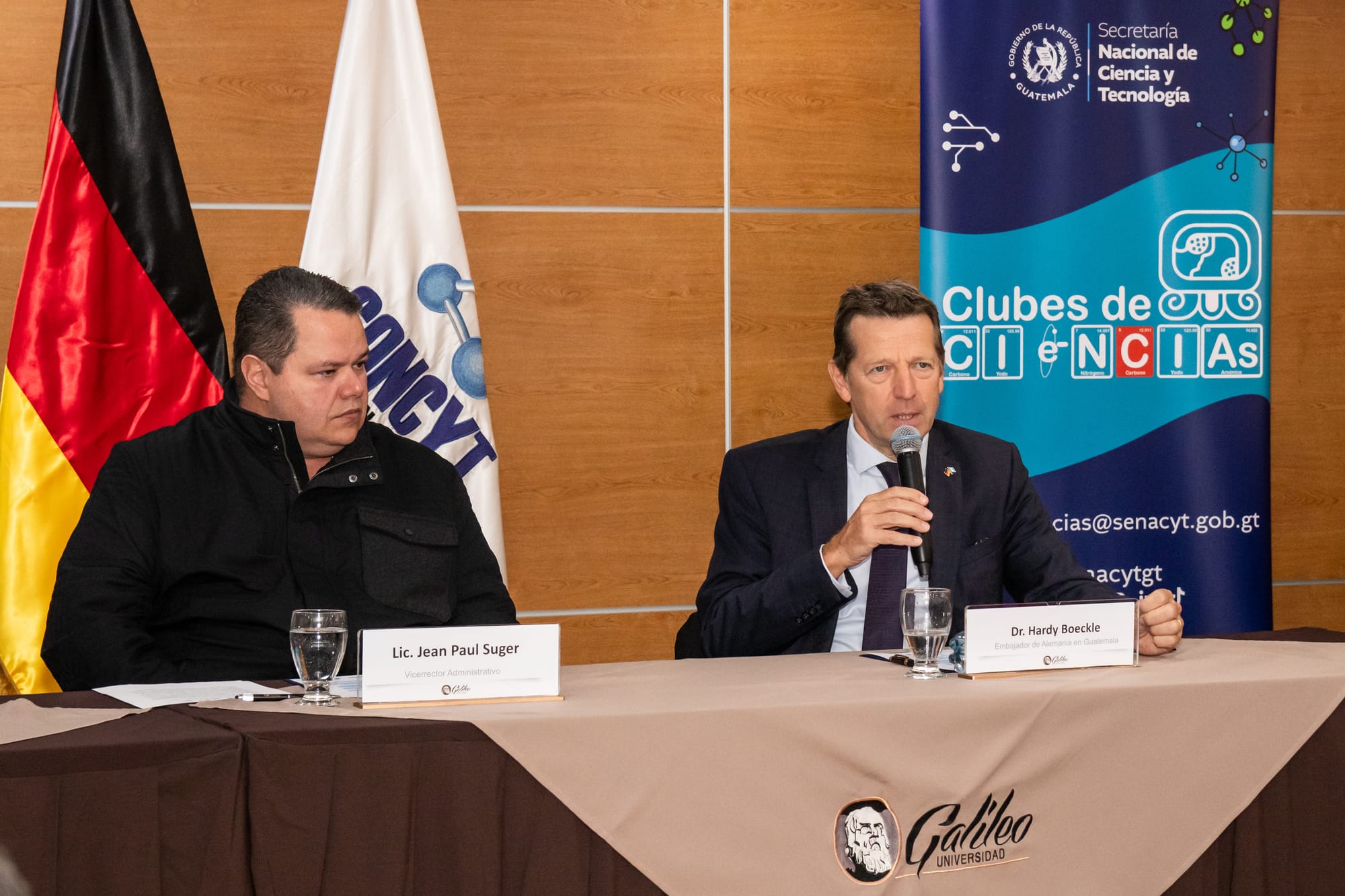
- Hardy Boeckle, Ambassador of Germany to Guatemala
- Enrique Pazos, Deputy Secretary of Senacyt;
- and Carlos Alberto Portillo, Mayor of Esquipulas.
Science Clubs: learning through curiosity and experimentation
The Science Clubs are designed to foster curiosity, critical thinking, and creativity through practical experiences, scientific discussions, and direct mentoring by scientists. Their objective is to motivate young participants to understand, innovate, and contribute to Guatemala’s development through science-based learning.
Jean Paul Suger, Vice Chancellor of Universidad Galileo, explained that the initiative is grounded in an innovative pedagogical approach.
“The mini-project proposal is based on the DESPERTAR methodology, which seeks to encourage early interest in science and technology by promoting critical thinking, creativity, and hands-on experimentation,” he said.
From Senacyt’s perspective, the project also represents a broader social impact. Enrique Pazos, Deputy Secretary of the institution, highlighted that the initiative contributes to widening access to knowledge.
“Awakening an interest in science does not only create professionals, but also critical and engaged citizens committed to the country,” he noted.
Three training modules to activate scientific skills
With the donated equipment, the Science Clubs will implement three structured training modules.
- Despertar Habilidades focuses on curiosity and collaborative work
- Despertar Ciencia centers on practical experimentation
- and Despertar Tecnología promotes the responsible and innovative use of digital tools.
Together, these modules aim to build foundational scientific and technological skills among participating students.
A long-standing bilateral relationship
The donation forms part of the German Embassy’s cooperation program, which allocates annual resources to sustainable development projects in Guatemala. Under the leadership of Ambassador Dr. Hardy Boeckle, the diplomatic mission continues to strengthen a bilateral relationship with 178 years of shared history.
This technical and scientific partnership traces its origins to the 1847 Treaty of Friendship, Commerce, and Navigation, one of Guatemala’s earliest diplomatic agreements with the Hanseatic cities and later with the German Empire. Today, that historical relationship is reflected in concrete support for education and technological innovation aimed at empowering new generations.