AGEXPORT Study Points Nearshoring Investors to Guatemala's Secondary Cities

Guatemala's contact center and business process outsourcing (BPO) industry is mapping its next wave of growth outside the capital, after a new municipal ranking identified ten locations across the country with strong potential to host operations and create formal jobs.
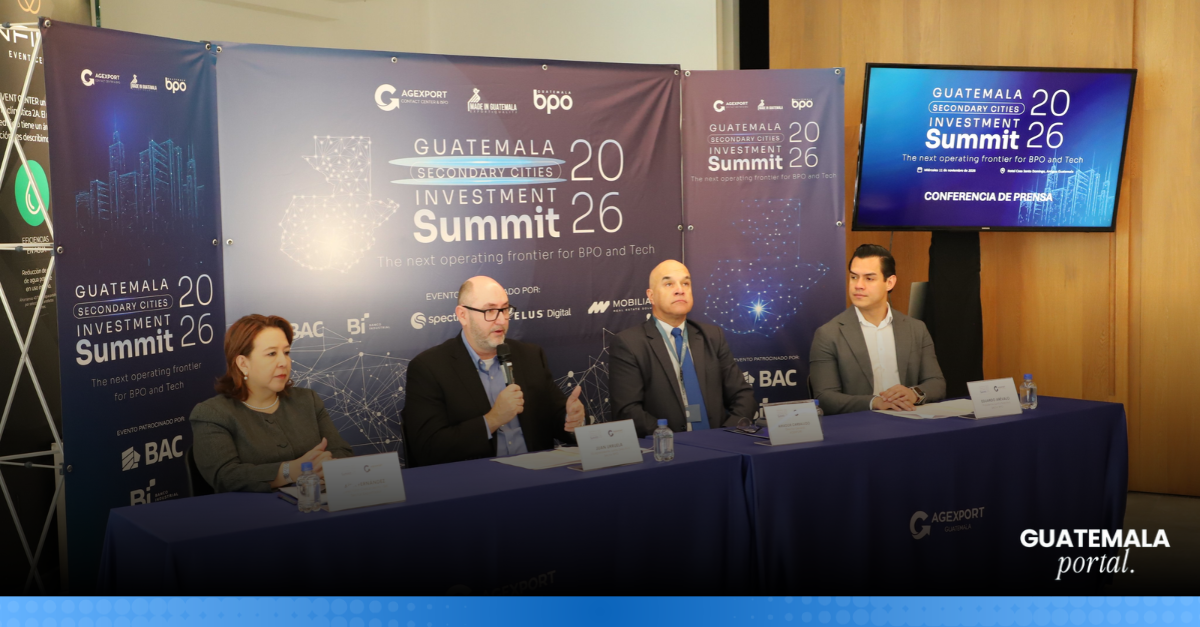
The findings were presented at the Guatemala Secondary Cities Investment Summit 2026, held Nov. 11 at Hotel Casa Santo Domingo in Antigua Guatemala. The event, organized by AGEXPORT's Contact Center & BPO Sector, gathered about 150 participants, including BPO executives, country operations managers, and municipal authorities, with the stated goal of exploring expansion projects in the departments.
@AGEXPORTGT identifica 10 zonas con potencial para atraer inversiones y operaciones de Contact Center y BPO fuera de la capital. Un estudio realizado en 323 municipios de 21 departamentos señala que 104 cumplen condiciones mínimas de mercado laboral. Entre las áreas destacadas… pic.twitter.com/zUDRjkvcBk
— Azteca Noticias GT (@AztecaNoticiaGT) November 11, 2026
Ten Locations on the Investment Map
The study, titled Ranking of Municipal Opportunities for BPO, was prepared in September 2026 by CABI Data Analytics at AGEXPORT's request. It evaluated 323 municipalities in 21 departments, excluding the department of Guatemala, using 46 variables grouped into 11 themes, among them education, English proficiency, connectivity, technology adoption, labor structure, power quality, infrastructure, and security.
Of the municipalities analyzed, 104 met the minimum labor market conditions defined in the evaluation. The ranking produced a portfolio of ten recommended zones and ten alternative sites. The locations highlighted at the summit are San Lucas Sacatepéquez, Quetzaltenango, Panajachel, Escuintla, Mazatenango, Huehuetenango, San Marcos, Zacapa, Barberena, and El Progreso, Jutiapa.
Charles Hess, CEO of CABI Data Analytics, presented the ranking. Juan Urruela, vice president of the BPO sector, outlined the scope of the research.

A Sector Built on Formal Employment
Eduardo Arévalo, president of AGEXPORT's Contact Center & BPO Sector, said the industry, active in Guatemala for almost 20 years, "today generates around 55,000 formal jobs." It also produces about Q11 billion a year in salaries and Q2.7 billion in taxes and social security contributions. Most operations remain concentrated in Guatemala City, which the decentralization effort aims to change.
The program featured Krishan Singh and Harshit Mittal of Everest Group on Guatemala's position in the nearshoring landscape, and Jocelle Batapa-Sigue, who shared lessons from the Philippines on developing cities outside the capital as digital services destinations. A panel with INTECAP, the Ministries of Labor, Economy, and Education, Invest in Guatemala, and BAC addressed how to decentralize operations. Afternoon one-on-one meetings paired mayors with BPO executives to discuss expansion projects.
Nearshoring Momentum Beyond the Capital
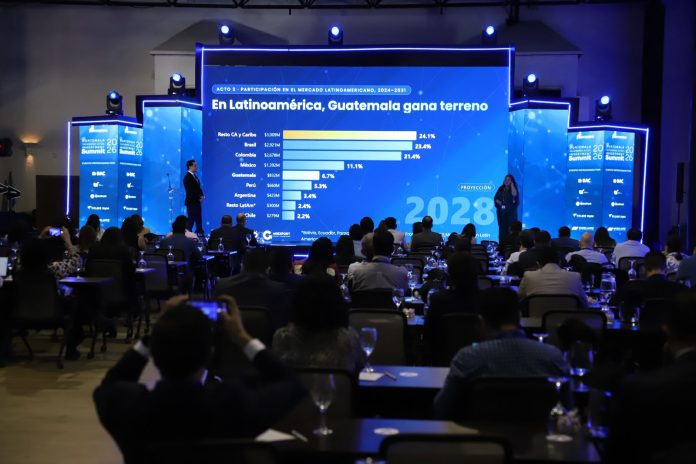
The industry ranks among Guatemala's most dynamic services exports. AGEXPORT data show the sector brought in more than USD 730 million in foreign currency in 2025, serving clients mainly in the United States, the United Kingdom, Canada, Mexico, and the Caribbean. Global operators active in the country include Concentrix, Teleperformance, TELUS Digital, Alorica, Capgemini, Genpact, and Allied Global. Services range from customer care to finance and accounting, procurement, human resources, and knowledge services for banking, telecommunications, retail, utilities, and media clients.
Hiring demand remains firm. In April, 15 companies offered more than 1,000 positions at AGEXPORT's Call Center Job Fair, alongside 300 English scholarships funded by the European Union. Andrea Méndez, the sector's recruitment coordinator, described the industry as one of the main generators of formal employment in Guatemala.
Capital flows support the trend. Preliminary Banco de Guatemala data show foreign direct investment of USD 1.9 billion in 2025, with information and communications among the top three recipient sectors at USD 246.6 million.
The decentralization push also responds to macroeconomic stakes. The central bank projects 4.1% GDP growth in 2026, but Arévalo cited Frost & Sullivan projections showing growth could slow to 0.2% by 2031 without new drivers. "If we don't act, the slowdown continues," he said. He also noted that Guatemala's economy, 21% larger than El Salvador's in 2021, held only a 17% edge by 2025.
Expanding BPO operations to secondary cities could spread formal, bilingual employment to departments with lower access to such jobs, while giving investors a deeper talent pool. Summit sponsors included BAC, Banco Industrial, Spectrum, TELUS Digital, and Mobiliare, signaling private-sector backing for a nationwide nearshoring strategy.
Source: News in America