
AGEXPORT and the Government Sign Agreement to Digitize Foreign Trade
Agexport and Guatemala’s government launch a digital transformation initiative, introducing a Single Window platform to streamline trade, reduce bureaucracy, and attract investment.


Agexport and the Government of Guatemala have formalized a strategic alliance aimed at accelerating digital transformation and improving trade facilitation, marking a new step toward modernizing the country’s export ecosystem.
A public-private agreement to modernize trade
The agreement was signed through a Letter of Understanding during an official session of the Digital Transformation Committee held at the National Palace of Culture in Guatemala City. The initiative brings together the export sector and government institutions to promote the development of technological tools that streamline administrative processes and strengthen the country’s investment climate.
According to the Ministry of Economy, the collaboration seeks to modernize public services, optimize state procedures, and create more favorable conditions for attracting foreign investment.
A unified platform to simplify processes
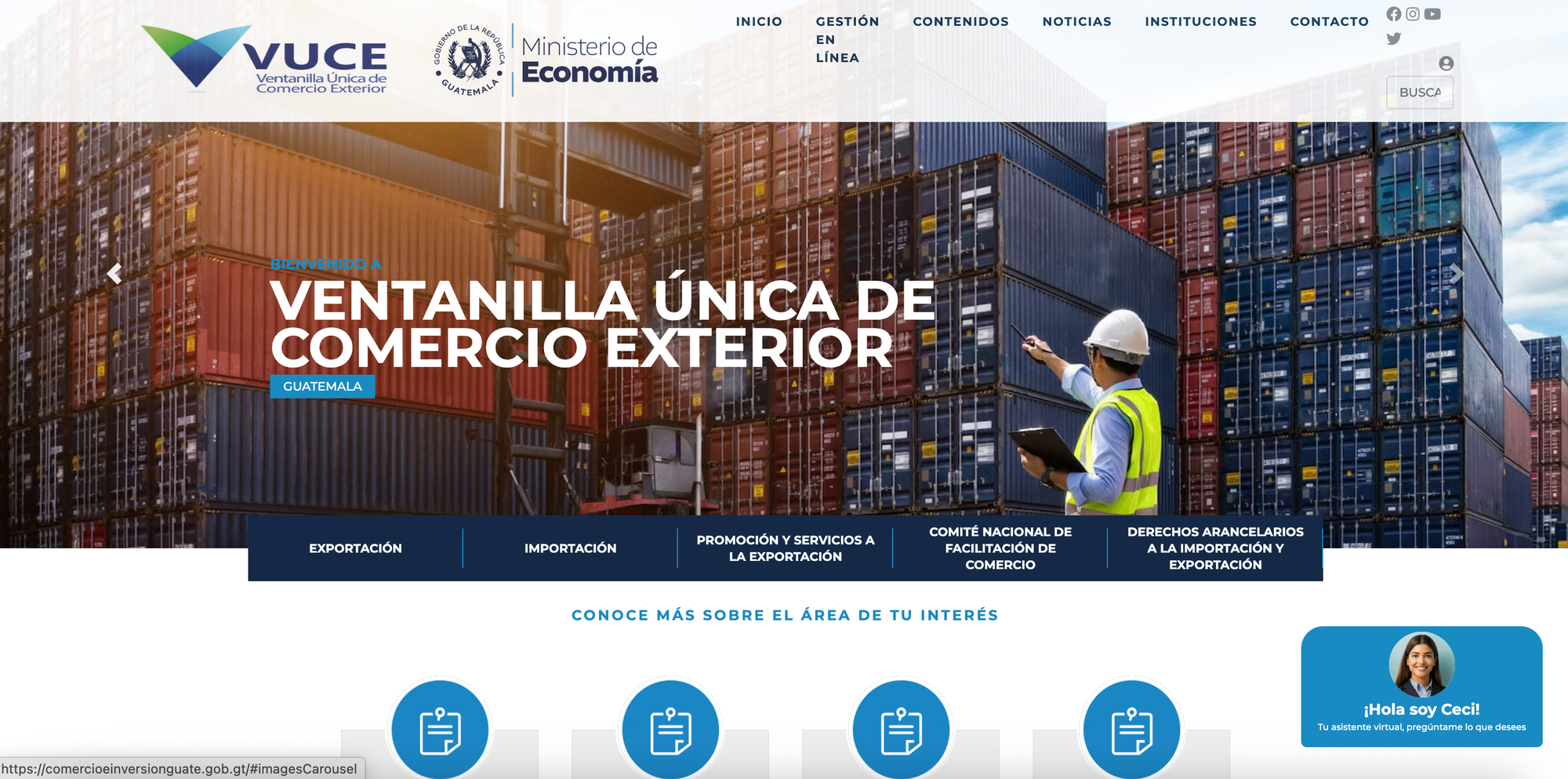
At the center of this effort is the launch of the Single Window for Trade and Investment (VUC), a platform designed to integrate and digitize procedures that are currently fragmented across institutions.
The system aims to simplify export and investment processes by reducing processing times and operational costs for both companies and citizens. Among its key features is the ability to track applications in real time, a function that, as highlighted by the Ministry of Economy,
“will contribute to strengthening transparency and efficiency in public management.”
Institutional coordination and private sector involvement
The initiative is being led by the Ministry of Economy through the National Competitiveness Program (PRONACOM), with the support of the Presidential Private Secretariat. The session brought together key public and private stakeholders to align efforts around digital transformation.
Representing the export sector, Amador Carballido, CEO of the Guatemalan Exporters Association (AGEXPORT), and Francisco Ralda, chairman of the association, participated in the signing.
Ralda emphasized “AGEXPORT’s willingness to collaborate with the public sector to facilitate trade, foster innovation, and expand the international reach of Guatemalan companies.”
Claudia De Del Águila, Director of Export Environment at AGEXPORT, also contributed to the discussion, highlighting the direct impact of modernization on Guatemala’s global positioning.

Digital transformation as a national strategy
The creation of the Interinstitutional Digital Transformation Committee is part of broader efforts under the Strategic Plan for Digital Transformation and the National Agenda for Modernization of the Executive Branch. These initiatives aim to improve government efficiency and promote the adoption of technological solutions aligned with the country’s productive development.
The VUC platform includes digital forms and unified processes intended to eliminate duplication, allowing businesses and entrepreneurs to complete procedures online and monitor their progress without intermediaries or unnecessary delays.
Competitiveness, transparency, and investment attraction
Amid ongoing challenges in international trade, private sector representatives underscored the importance of institutional interoperability, legal certainty, and reduced bureaucracy as critical factors to enhance competitiveness and support job creation.
The agreement reinforces collaboration between government entities and business organizations, positioning Guatemala as a more competitive destination for international investors while facilitating the expansion of its export sector.